

Articles | Dr. Siavash Parvardeh
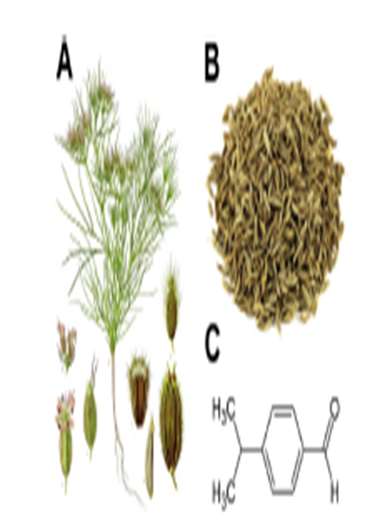
Antinociceptive and antineuropathic effects of cuminaldehyde, the major constituent of Cuminum cyminum seeds: Possible mechanism

writer :
-

author :
-
.png)
Translator :
-

year of publication :

Publishers :
-
Ethnopharmacological relevance: In Iranian traditional medicine, Cuminum cyminum is a unique medicinal herb for pain relief. Cuminaldehyde has been distinguished as the major constituent of C. cyminum seeds; even though, the analgesic effect of cuminaldehyde has not yet been examined. Aim of the study: The nobility of this study was to assess cuminaldehyde effect on nociceptive and neuropathic pains; furthermore, evaluation of its possible mechanisms of action. Materials and methods: Hot plate, formalin, and acetic acid-induced writhing tests were used to evaluate nociception in mice. Naloxone (opioid receptors antagonist), L-arginine (nitric oxide (NO) precursor), L-NAME (NO synthase inhibitor), sodium nitroprusside (NO donor), methylene blue (guanylyl cyclase inhibitor), sildenafil (phosphodiesterase inhibitor), and glibenclamide (KATP channel blocker) were used to determine the implication of opioid receptors and L-arginine/NO/cGMP/KATP channel pathway. Allodynia and hyperalgesia were investigated in the CCI (chronic constriction injury) model of neuropathic pain in rats. The ELISA method was used to measure the inflammatory cytokines in serum samples of rats. The entire chemicals were intraperitoneally injected. Results: Cuminaldehyde (100 and 200 mg/kg) significantly decreased the latency to nociceptive response in the hot plate test. The outcome of cuminaldehyde was completely antagonized by naloxone (2 mg/kg). Formalinand acetic acid-induced nociception was significantly inhibited by cuminaldehyde (12.5–50 mg/kg). The antinociceptive effect of cuminaldehyde was reversed in writhing test by L-arginine (200 mg/kg), sodium nitroprusside (0.25 mg/kg), and sildenafil (0.5 mg/kg); however, L-NAME (30 mg/kg) and methylene blue (20 mg/kg) enhanced the effect of cuminaldehyde. Glibenclamide (10 mg/kg) did not alter the antinociceptive effects of cuminaldehyde. In the CCI-induced neuropathy, cuminaldehyde (25–100 mg/kg) significantly alleviated allodynia and hyperalgesia and decreased the serum levels of TNF-α and IL-1β. Conclusion: It was attained magnificently that cuminaldehyde exerts antinociceptive and antineuropathic effects through the involvement of opioid receptors, L-arginine/NO/cGMP pathway, and anti-inflammatory function.